
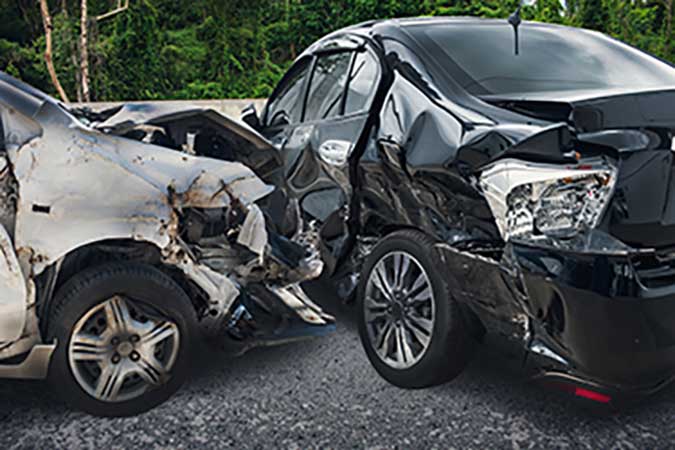
T-bone car accidents rank among the most damaging types of collisions on the road. Unlike a typical fender bender, the force in a side-impact crash strikes where a vehicle has the least amount of protection for its occupants. That lack of protection is why these crashes so often lead to severe injuries.
According to safety research, side-impact collisions contribute to a significant share of passenger vehicle fatalities each year. Understanding how fault is determined can make a real difference in the outcome of an injury claim.
How Fault Is Determined
Liability in t-bone car accidents is not simply a matter of which vehicle struck the other. Instead, fault typically comes down to which driver had the right of way at the time of the crash. Only one vehicle can legally hold that right at any given intersection or crossing point.
The driver who failed to yield the right of way is generally held responsible for the collision. That said, physical evidence at the scene is often limited, which means fault frequently hinges on driver statements and witness accounts rather than clear-cut proof.
This is one of the reasons an attorney’s involvement matters early on. Insurance adjusters representing the other driver will often try to obtain statements that shift more blame onto the injured party. Having legal representation helps protect against that tactic from the very beginning.
Can the Driver With the Right of Way Still Be at Fault?
Even a driver who legally had the right of way can still share fault in a t-bone car accident. Several situations can shift some responsibility back onto that driver, including:
- Crossing multiple lanes of traffic before the point of impact
- Driving without headlights on during low-visibility conditions
- Traveling well above the posted speed limit
- Driving while distracted, such as using a phone
- Driving under the influence of alcohol or drugs
Each of these factors can reduce or shift the amount of compensation available, which is why a thorough investigation into both drivers’ conduct is essential.
Third Parties and T-Bone Accident Liability
Not every t-bone car accident traces back solely to driver error. Sometimes a third party bears some or all of the responsibility for what happened.
Faulty Repairs and Vehicle Maintenance
A repair shop that fails to properly service brakes or headlights can contribute directly to a crash. If a mechanical failure played a role in the collision, the business responsible for that repair work may share liability for resulting injuries.
Malfunctioning Traffic Signals
Defective traffic control equipment is another possible factor. When signal lights fail or display conflicting signs, such as one driver receiving a green light while another receives a turn signal at the same time, both drivers may reasonably believe they have the right of way.
In these situations, the agency or entity responsible for maintaining the traffic signal system may bear some responsibility alongside the drivers involved. These cases are rare, but they highlight why every angle of an accident needs careful examination.
Compensation Available After a T-Bone Accident
Victims of t-bone car accidents may be entitled to both monetary and non-monetary damages, depending on the severity of their injuries and how the crash has affected their lives.
Monetary Damages
These damages reimburse direct, quantifiable costs tied to the accident, such as:
- Medical treatment and ongoing care
- Lost wages from missed work
- Vehicle repair or replacement costs
- Physical rehabilitation expenses
- Future medical and prescription costs
Because these losses can typically be documented with bills, pay stubs, and repair estimates, they are usually the more straightforward portion of a claim to calculate.
Non-Monetary Damages
Non-monetary damages compensate for harder to quantify losses, including:
- Pain and suffering
- Emotional and mental anguish
- Loss of companionship
Courts weigh how significantly and permanently a victim’s life has changed as a result of the crash. Cases involving lasting or life-altering injuries generally result in higher non-economic awards.
Common Injuries From T-Bone Accidents
Side-impact crashes frequently cause blunt force trauma, particularly to the head and chest, since there is little structure between the occupant and the point of impact. Injuries can range from broken bones and internal trauma to traumatic brain injuries and spinal damage.
If there is time to react, turning the vehicle away from the oncoming impact can sometimes reduce the force of the collision. Still, in many cases, drivers have no opportunity to avoid the crash altogether.
How an Experienced Attorney Can Help
T-bone car accidents often leave victims facing long recoveries, mounting medical bills, and lost income, all while trying to prove what actually happened at the scene. An experienced t-bone car accident attorney can investigate the crash thoroughly, gather witness statements, and bring in accident reconstruction specialists when needed to establish who was truly at fault.
An attorney can also handle negotiations with insurance companies, which is critical since adjusters are trained to minimize payouts. Skilled negotiators know how to build a strong case and push back against lowball offers.
Beyond the legal strategy, the best personal injur law firms provides guidance through a stressful and often overwhelming process. If you or a loved one has been injured in a t-bone car accident, speaking with a qualified personal injury attorney can help you understand your rights and pursue the compensation you deserve.
