
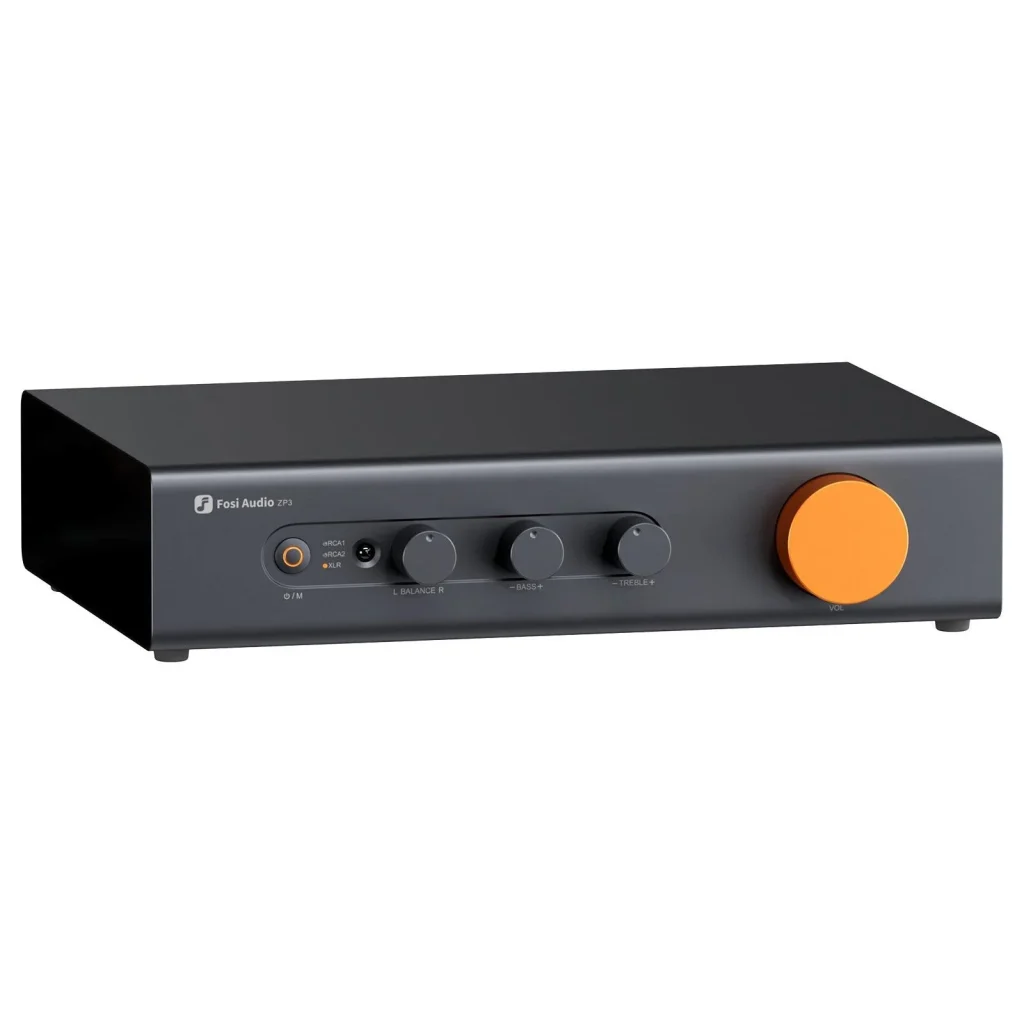
The word preamp covers several different jobs, and mixing them up is the easiest way to buy the wrong box. A turntable, a microphone, and an electric guitar all produce weak signals, but they need very different handling before an amplifier can use them. That is why the market splits into types: preamplifiers designed for one job almost always beat a single box trying to do everything.
This guide sorts out the four main types in plain language: phono stages for turntables, line-level units for finished sources, mic preamps for recording, and instrument preamps for guitars and basses. By the end you will know which type each of your sources needs, and why good preamplifiers are usually designed for one job rather than all of them.
Phono Stages
Turntables are the special case. A cartridge produces a tiny signal with a deliberately uneven frequency response, because records are cut with bass reduced and treble boosted to save groove space. preamplifiers made for turntables do two jobs at once: they apply the RIAA equalization curve that reverses that cut, and they raise the signal to line level.
Without the equalization step, records sound thin and harsh, no matter how good the rest of your system is. That is why a turntable plugged into a normal line input sounds wrong, and why preamplifiers built for vinyl are a category of their own. If vinyl is your main source, this is the only type that matters, and the rest of this guide is background reading.
Line-Level Units
Most modern sources are already at line level: CD players, streamers, televisions, and DACs all output a signal strong enough for a power amplifier in theory. A line-level preamp still earns its place by providing volume control, input switching, and a clean buffer between source and amplifier, all without changing the sound.
Think of these as the control center of a system rather than a rescue device. preamplifiers of this kind do not fix a weak signal, because there is nothing to fix. They organize your sources, keep impedance matched, and make sure the signal arriving at your amplifier is as clean as the one that left your player. Most preamplifiers in living rooms are actually line-level units, even when the box says nothing about it.
Microphone Preamps
Microphones produce the weakest signals in home audio, far below even a turntable cartridge, and they need the most gain. A mic preamp raises that whisper by fifty decibels or more while adding as little noise as possible, and it usually supplies phantom power for condenser microphones that need it to work at all.
This type lives mostly in recording setups and podcast desks rather than living-room hi-fi. The buying priorities shift here: clean gain matters more than anything, because every decibel of noise added at this stage gets amplified by everything downstream. That is why preamplifiers for microphones are judged first on noise, not on features. Budget mic preamps often disappoint precisely here, while mid-priced preamplifiers built for recording tend to be honest about their noise figures.
Instrument Preamps
Electric guitars and basses sit between microphones and line sources in output level, but they have a special need: very high input impedance. Plug a guitar into a normal line input and it sounds dull and lifeless, because the pickup is loaded down. An instrument preamp presents the right load, so the pickup keeps its sparkle, and often adds tone shaping voiced for the instrument.
Many guitarists meet this type inside a pedal or an amplifier, where it is built in rather than separate. Standalone instrument preamplifiers make sense when you record direct or run a complex pedalboard into a clean power amp. Good preamplifiers for guitar keep that sparkle intact instead of dulling it. They are the least relevant type for a pure listening setup, but essential if you play.
- Turntable: phono stage with RIAA equalization
- CD, streamer, TV: line-level control center
- Microphone: high-gain preamp with phantom power
- Guitar or bass: high-impedance instrument preamp
The four types exist because sources differ, not because manufacturers wanted more products. Match the type to the source, and the rest of your system gets a signal it can actually use. Mix them up, and even expensive gear will sound wrong. The right preamplifiers make the whole chain feel effortless. When someone recommends preamplifiers without asking what sources you own, they are skipping the only question that matters.
If you remember only one thing from this guide, make it this: buy for the source in front of you, not for a collection you might own someday. A phono stage for the turntable you play, a mic input for the microphone you record with, and a line-level control center for the digital sources you use daily. Systems built this way sound better, cost less, and leave you free to upgrade one piece at a time, when a real need appears rather than a hypothetical one.
