
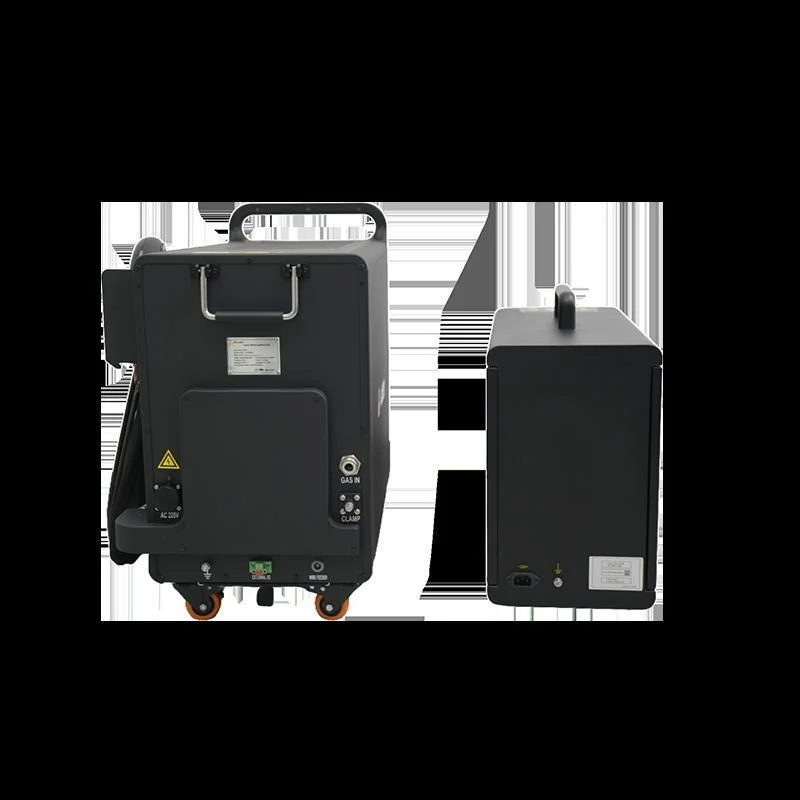
Welding used to mean a fixed workshop, a heavy power source, and a lot of setup before the first spark. For small shops, repair technicians, and fabricators who work on site, that setup was often the biggest cost of the job, not the weld itself. Handheld laser welding changed that equation by packing a focused beam into a tool you can carry to the work instead of bringing the work to the machine.
A portable laser welding machine uses a concentrated laser beam to melt and join metal with far less heat spread than a traditional arc welder. The result is a cleaner weld, less distortion on thin materials, and much less cleanup afterward. But not every handheld unit suits every job, and the differences between models matter more than the marketing suggests.
How laser welding actually works
At its core, laser welding focuses light energy onto a tiny spot on the metal, melting it in a fraction of a second. A filler wire can be fed into the joint for gaps or stronger builds, but many thin-sheet welds need no filler at all. Because the beam is so narrow, the weld bead is slim and neat, which is why laser welds often look finished straight off the machine.
The concentrated heat is the real advantage. An arc welder spreads heat across a wide area, which warps thin panels and leaves discoloration that needs grinding and polishing. A laser keeps the heat-affected zone small, so stainless steel keeps its finish and thin parts hold their shape. That is why laser welding has become popular for kitchen equipment, signage, battery trays, and decorative metalwork.
Who benefits most from going portable
Small fabrication shops gain the most, because they can take on repair and installation work that used to require a full workshop visit. A gate installer, for example, can weld a broken stainless hinge on site instead of removing the whole gate. HVAC technicians use handheld lasers for refrigerant lines and custom brackets, where a clean, leak-tight joint matters more than raw strength.
For a repair technician who drives to clients, a portable laser welding machine can turn a two-day shop job into a same-day visit. That speed is worth real money: fewer return trips, less downtime for the customer, and jobs that competitors with fixed equipment simply cannot take. It also opens up work in places where dragging a welding cart is impractical, such as rooftops, tight plant rooms, and finished interiors.
What to check before you buy
Before you commit to a portable laser welding machine, check these points honestly against the work you actually do, not the work you imagine doing one day. Power ratings, material range, and support all vary widely, and the cheapest unit is rarely the cheapest over two years of use.
- Power and weldable thickness: match the output to your thickest regular job, not your dream job.
- Materials: confirm it handles your metals, especially stainless, aluminium, and galvanised steel.
- Cooling: air-cooled units are simpler; water-cooled units run longer on heavy work.
- Wire feeder: a good feeder matters for gaps and dissimilar metals.
- Safety gear: proper laser-rated glasses for the exact wavelength are non-negotiable.
- Service and parts: check who repairs it locally and how fast lenses and nozzles arrive.
Safety and upkeep
A laser welder demands more respect than an arc welder. The beam is invisible in some wavelengths, so safety glasses rated for the exact wavelength are mandatory for everyone in the area, not just the operator. Reflective surfaces deserve attention too, since a stray reflection can damage eyes just as surely as a direct beam.
Day-to-day upkeep is simple but unforgiving if skipped. Keep the protective lens clean, check the nozzle for spatter, and store the fibre cable without sharp bends. Most breakdowns trace back to a dirty lens or a kinked cable, both of which are cheap to prevent and expensive to fix.
Beginners also make a handful of predictable mistakes that are easy to avoid once you know them. The first is starting on the highest power setting, which burns through thin material and leaves a rough bead. Always begin low and work up, testing on scrap from the same batch. The second is skipping a test weld on a new material or thickness, which leads to guesswork on the actual job. A two-minute test saves an hour of rework. The third is neglecting the shielding gas: too little flow lets oxygen into the weld and weakens it, while too much wastes gas and disturbs the melt pool. Finally, many new users forget that the protective lens is a consumable. Inspect it before each session, keep spares on hand, and replace it at the first sign of pitting or discoloration rather than pushing through and damaging the focusing optics behind it.
Handheld laser welding is not a replacement for every welding process, and it should not be sold as one. But for thin metals, visible welds, and on-site work, it is often faster, cleaner, and easier to learn than the alternatives. Choose a unit that fits your real workload, protect your eyes properly, and maintain the lens, and it will earn its keep quickly.
