
Algorithmic Hi Lo prediction models help a user read dice over under sequences through timing gaps rather than guesswork. In Tài Xỉu contexts a player can compare roll cadence with prior result bands across one compact session sheet. Each member gains a cleaner view of signal clusters without relying on chat noise or table myths during play.
Dice signal reading from uncommon result membranes
Algorithmic Hi Lo prediction models treat each dice round as a trace within a short numerical sheet for sharper reading. A user records total points plus side direction through a fixed order during compact dice sessions for later model sorting. This method keeps attention on measurable cadence instead of loose stories around lucky streaks after sudden rolls during play.
In Tài Xỉu play a player may separate repeated totals from isolated spikes across several linked rounds inside compact samples today. A member then compares interval length with side shifts to locate clusters that deserve deeper review during later checks. The goal is not certainty but a cleaner map of probability pressure within noisy dice movement for each member.
Algorithmic Hi Lo prediction models compare dice timing signals
Algorithmic Hi Lo prediction models map dice pulse clusters
Dice pulse clusters appear when recent rolls create similar total ranges within a tight span across one recorded sample. A user can treat these clusters as model inputs before assigning any prediction label to the next side.
Interval sheets
Interval sheets store each result beside a distance value taken from the previous matching side within one sample. Algorithmic Hi Lo prediction models use this distance to reveal repeat pressure across short roll chains during compact review cycles. A player should compare nearby gaps because sudden compression often changes the expected rhythm inside one live sample during play.
Total band filters
Total band filters group dice sums into low middle high lanes across a controlled sample for model review within current notes. A member uses these lanes to reduce random noise before reviewing side outcomes during each compact sequence review for comparison. The filter becomes useful when several totals return inside one lane without broad spread across nearby successive rolls under pressure.
Algorithmic Hi Lo prediction models in drift checks
Drift checks track whether side outcomes move away from their recent balance point across a defined roll window during review. A user can mark each drift with a simple plus or minus symbol during review inside the same sheet. The model then studies drift length before deciding whether a pulse remains active inside the current cluster or already faded.
Roll window scoring
Roll window scoring gives each fresh result a small value based on recent repetition inside one chosen window for comparison. A player compares those values across equal windows to prevent one spike from dominating review during model reading. Algorithmic Hi Lo prediction models become clearer when scores remain stable across several windows within close dice cycles.

Algorithmic Hi Lo prediction models reveal clustered dice pulses
Narrow result memory beneath dice over under cycles
Short result memory can show whether a cycle still carries useful signal after recent noise within equal samples. Inside Tài Xỉu patterns a member should separate memory patterns by window size before making any side estimate.
Sequence residue
Sequence residue describes tiny traces left after similar totals appear near one another inside a short sample during review. Algorithmic Hi Lo prediction models can compare those traces with fresh rolls to spot weak continuity within the cycle. A user should treat residue as temporary because dice outputs lose structure after wider gaps inside later rolls.
Side pressure marks
Side pressure marks record how often a side appears after a chosen total band inside one cycle during review. A player can review marks inside equal samples to avoid mixing unrelated cycle shapes during signal reading across one sheet. The mark becomes stronger when repeated side returns follow the same band within close spacing inside a compact sequence.
Threshold trims
Threshold trims remove signals that appear too far from the active sample center during dice review inside the same sheet. Algorithmic Hi Lo prediction models use trims to keep unstable tails away from core analysis in compact windows. A member gains a neater signal sheet when rare totals do not distort current flow during side estimates.
Bias gap reading
Bias gap reading studies whether one side keeps returning after similar waiting gaps within linked samples inside the same record. A user can compare gap length with side labels without adding loose explanations to the record during model review. This reading helps a player decide whether current pressure is fading or still compact inside the current sample window.

Bias gaps organize dice memory before side estimates
Hidden cadence notes before a dice side estimate
Cadence notes turn raw dice results into a cleaner timeline for model comparison across short samples for each member. A player can review cadence after every compact sample without changing any earlier labels inside the same record after play.
Time slice tags
Time slice tags divide a session into even parts based on roll count during model review inside one compact sheet. Algorithmic Hi Lo prediction models compare each slice to find rhythm changes before a side estimate inside each tagged sample. A member should keep tag size steady because mixed slices can blur useful rhythm within the same sample.
Micro reversal traces
Micro reversal traces appear when a side flips after two close results with similar totals inside one narrow sample. A user records the reversal point then checks whether another flip follows the same spacing during later review. These traces matter only when several flips appear within one narrow roll area across close samples after scoring.
Probability texture
Probability texture describes how totals feel across nearby windows after scoring each result inside one short sample sheet. Algorithmic Hi Lo prediction models translate that texture into small signals for later comparison inside equal dice windows. A player should focus on repeated texture shifts rather than one dramatic side change inside compact model review.
Conclusion
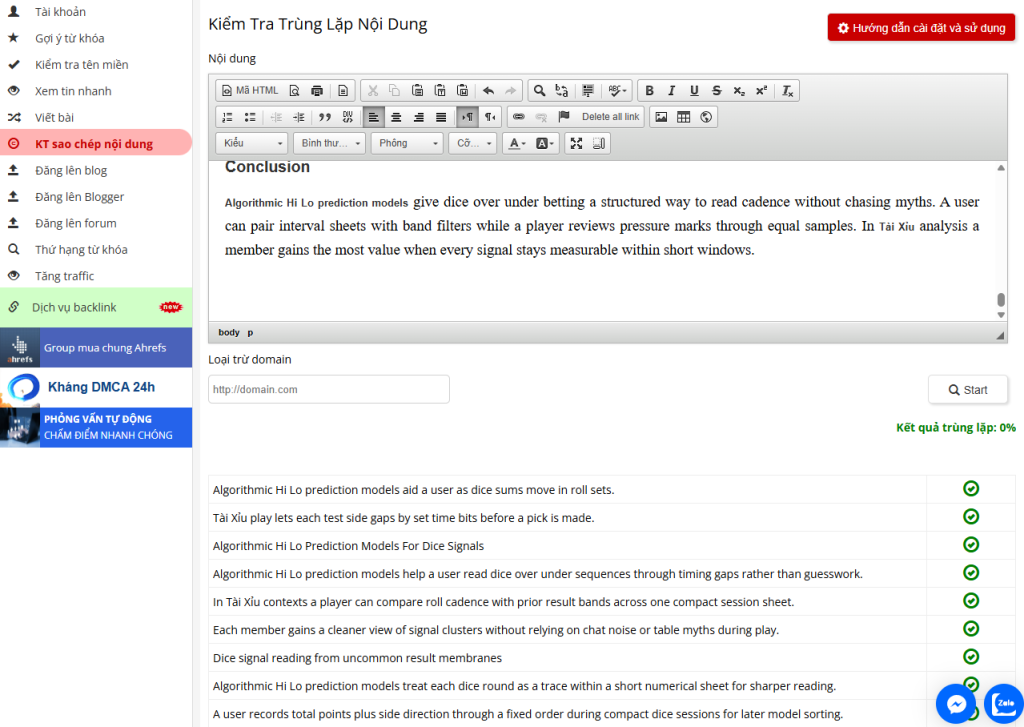
Algorithmic Hi Lo prediction models give dice over under betting a structured way to read cadence without chasing myths. A user can pair interval sheets with band filters while a player reviews pressure marks through equal samples. In xóc đĩa online analysis a member gains the most value when every signal stays measurable within short windows.