
There is a particular kind of exhale that only happens at the end of a long day, the one where your shoulders finally drop, your jaw unclenches, and the room grows quieter around you. For many of us, that exhale has a shape. It looks like a soft cushion under our back, a footrest lifting gently under our knees, and a lamp glowing warmly beside us. It looks like a recliner chair. More than a piece of furniture, this single seat quietly becomes the emotional center of a home, the place where we come to breathe, to think, to forgive the day. In a world that seems designed to keep us upright and reachable, choosing a chair that gives you permission to lean back is a small but meaningful act of self-kindness. This is not really about upholstery or mechanisms. It is about the moments of tenderness a well-chosen chair makes possible.
When a Chair Becomes a Sanctuary
Ask anyone about their favorite spot at home and watch their expression soften. They will describe a corner near a window, a lamp with a warm bulb, a blanket folded just so, and almost always, a chair that welcomes them back. The recliner chair carries an emotional weight that few other furnishings can match. It is the seat where new parents rock a fussy baby at three in the morning, where grandparents disappear into a good book on a rainy Sunday, where partners share the last hour of the evening in comfortable silence. It becomes a witness to the ordinary miracles of family life, holding space for the quiet as well as the celebrations.
What makes this piece so quietly powerful is the way it invites you to slow down. Standing, walking, and even sitting upright all belong to the world of tasks and expectations. Reclining, on the other hand, belongs to you. When the backrest tilts and the legs rise, your body senses a shift, a small permission slip written just for the moment. That is why so many people describe searching for the right recliner chair as an emotional project rather than a purely practical one. They are not shopping for cushions and mechanisms. They are looking for a place to belong to themselves again.
The Quiet Language of Comfort
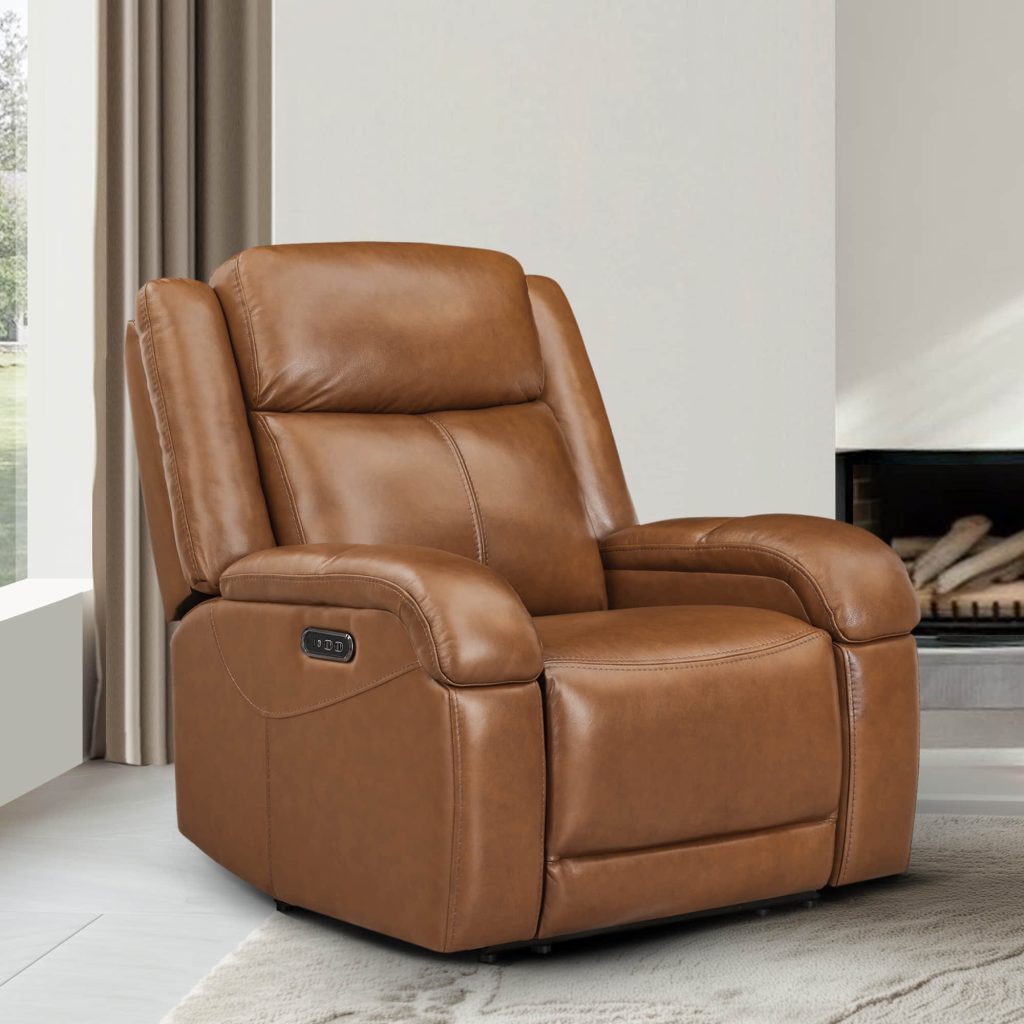
Comfort has its own vocabulary, and it is spoken not in words but in the small sighs of relief a body makes when it finally feels supported. A well-designed recliner chair speaks this language fluently. The lumbar curve meets the small of your back like an old friend. The headrest cradles the base of your skull, easing the tension that gathers there after a day of screens and conversations. The armrests catch your forearms at exactly the right height, so your shoulders can finally let go of the invisible weight they have been carrying since morning.
Then there is the subtle theater of the recline itself. A gentle motion, a soft click, a slow tilt, and suddenly your body is angled toward the ceiling instead of the to-do list. Some chairs offer a manual pull, satisfying in its old-fashioned way. Others glide back with the whisper of a power mechanism, no more effort than tapping a button on the armrest. Either way, the message is the same. It is time to soften. Even the smallest touches, like a headrest that adjusts independently or a footrest that lifts a little higher, become quiet gestures of care from a designer who understood that comfort is emotional as much as physical.
Choosing the One That Feels Like Yours
The truth is that no chair works for everyone, because no two people carry their days in the same way. A tall reader with a stiff lower back needs something different from a new parent with a colicky baby, who needs something different from a retiree who wants to nap without waking with a sore neck. Finding the recliner chair that fits your life means paying attention to how you actually live in your living room, not how a catalog imagines you do.
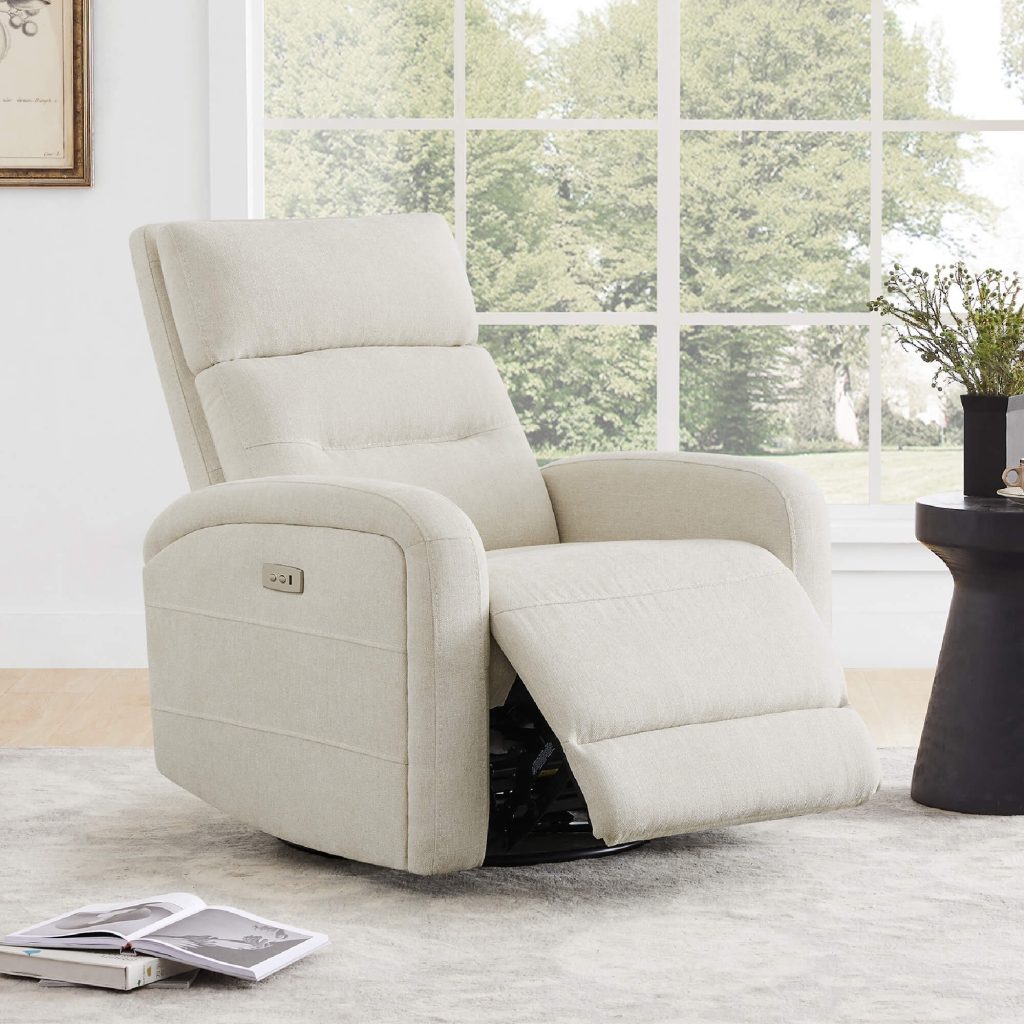
Start with the shape of your body. Sit fully back and notice whether your feet still touch the floor comfortably, whether your knees bend at a natural angle, whether the backrest supports the length of your spine or leaves gaps. Then think about the shape of your evenings. Do you curl sideways with a novel, sprawl for a long film, or gently rock a child to sleep? A swivel base can open up a small room by turning to face conversation or television without moving the chair itself. A glider offers a soothing back-and-forth motion that many find deeply calming. A wall-hugger design saves precious inches in an apartment where every square foot must earn its keep. When you match the movement of the chair to the movement of your life, the whole room seems to breathe more easily.
Room to Feel at Home
A recliner does not live alone. It lives beside a side table where a cup of tea cools, under a lamp that pools light on the page you are reading, near a window that changes color with the seasons. When you introduce a chair like this into a room, you are really composing a small stage for the moments you most want to keep. That is why fabric, color, and silhouette matter as much as the mechanism inside. A soft boucle in a pale neutral invites a hand to rest on the armrest without thinking. A supple leather deepens with time, remembering every quiet evening it has held. A rich, saturated velvet turns an ordinary corner into a place people gravitate toward without knowing why.
Thoughtful makers such as CHITA LIVING understand that a recliner is not a machine to be hidden but a piece of the room to be loved. When the exterior lines are as considered as the interior support, you no longer feel torn between a chair that looks good and a chair that feels good. You simply have a chair that belongs. That harmony matters because you will look at it from across the room far more often than you sit in it, and the eye needs comfort as much as the body does.
The Care That Comes Back to You
People often think of comfort as a luxury, something optional and slightly indulgent. In truth, comfort is a form of care that quietly returns to every part of your life. When your body rests well in the evening, you sleep better at night. When you sleep better, you show up to the next morning with more patience, more curiosity, and more room to be kind. The recliner chair, humble and unassuming, becomes an invisible ally in this cycle. It gives your back a chance to release. It gives your mind a chance to wander. It reminds you that stillness is not laziness but restoration.
If you have ever sat down in a chair and felt tears rise unexpectedly, tears of relief rather than sadness, you already understand this. The body remembers when it is being taken care of, and it remembers when it is not. Making space for a proper place to rest is one of the gentler decisions you can make for the person you will be tomorrow. It is a decision that will still be paying you back years from now, in ways you may never bother to count.
Small Rituals, Long Evenings
Every beloved recliner eventually accumulates its own rituals. There is the folded throw on the armrest, the paperback with the cracked spine tucked into the cushion, the coaster ring on the side table, the pair of soft socks kept nearby. These are not clutter. They are the little markers of a life being lived in one particular place, night after night, season after season. A recliner chair does not just hold your body. It holds the version of you that is finally allowed to stop performing, the version that laughs quietly at a joke on television, hums along to a familiar song, or simply closes their eyes and listens to the rain.
A Soft Landing for Every Day
In the end, what makes a recliner chair worth its place in your home is not the mechanism or the material, though both matter. It is the feeling of arriving. After the commute, the errands, the difficult conversation, the long list of small tasks, there is one specific spot in the world that opens its arms without asking anything in return. Choosing that spot with care, paying attention to how it supports your body and how it fits your room, is a way of promising yourself that rest will be waiting when you need it. Homes are built out of many small tender decisions, and the seat you sink into at night is one of the tenderest. If you can find a chair that turns the last hour of the day into something you look forward to, you have found something quietly extraordinary, and your evenings will thank you for it for a very long time.
