
If you are sourcing traffic lights from China, you will find hundreds of suppliers. The challenge is not finding a low price. It is finding a supplier whose products meet international standards, arrive on time, and keep working for years. A traffic signal company in China can offer that, but only if you check the right things before you order. This guide uses Sinowatcher, based in Shenzhen, as an example.
Products You Can Buy From One Supplier
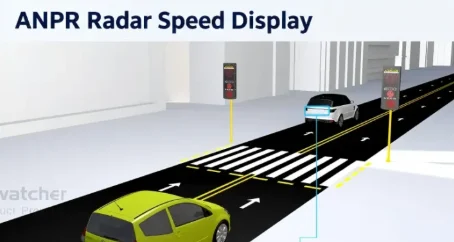
Sinowatcher offers a wide product range, so a buyer can source most of a traffic project from one place. Its main products are LED traffic signal lights, pedestrian traffic lights, bicycle traffic lights, traffic countdown timers, and traffic signal controllers. It also offers lane control cross-arrow lights, wireless vehicle detection systems, road studs, solar warning lights, LED street lights, LED high bays, all-in-one street lights, solar flashing yellow lights, and radar speed signs. That range matters in practice. A city project usually needs more than a signal head. It needs a controller, a timer, a detector, and road studs to mark lanes at night. Buying those items from one supplier reduces compatibility problems. Other Chinese suppliers offer a similar range. XS Traffic offers solar traffic lights, LED traffic signals, illuminated signs, and road markers. NOBLE Opto offers traffic lights and traffic signs.
Prices: What You Pay For
Traffic signal prices vary widely. Price depends on signal size, LED type, housing material, controller type, order quantity, customisation, and shipping. A 300 mm pedestrian signal can cost around USD 40 to 50 per piece, while a full system with controller, timer, and detection can cost hundreds or thousands of dollars per intersection. Alibaba listings show a wide range, from under USD 100 for a simple signal to over USD 1,500 for a larger system. A traffic signal company that quotes a very low price may be cutting costs on LED quality, housing, or testing. That saving can disappear quickly if the signal fails in the first year. The fair comparison is price per working year, not price per unit. Ask for the same basis when comparing quotes: product, size, LED, housing, controller, certification, warranty, and delivery.
Quality Standards to Look For
Quality is the first test for any supplier. Sinowatcher says all its products meet rigorous quality management requirements and are certified in accordance with ISO 9001:2015 standards. Its products also comply with CE, RoHS, IEC, EN12368, and Chinese GB14887-2011. EN12368 is the European standard for traffic signal heads. GB14887-2011 is the Chinese national standard. A supplier that meets both is more likely to meet the standard in your country. Ask for the actual certificates, not just a claim on a website. Check the certificate number, the issuing body, and the expiry date. Also ask about testing. Does the supplier test each signal for brightness, waterproofing, and electrical safety before shipping?
Factory, Team, and Experience
A supplier’s factory and team tell you a lot about its capacity. A traffic signal company with a large factory can handle bigger orders. Sinowatcher has a 15,000 square metre factory, with more than 180 employees, more than 20 technical staff, and more than 30 sets of automation equipment. It says it has over a decade of industry experience. Its market has expanded to more than 80 countries, including Europe, South America, Southeast Asia, Australia, South Africa, and the Middle East. A buyer-oriented guide lists it second among the top 10 manufacturers in China, after XS Traffic. Other names include Yangzhou FAMA, Qixiang, Hangzhou ZGSM, NOBLE Opto, BBM Technology, Qingdao Hisense TransTech, Hangzhou Hikvision, and Zhejiang Dahua Technology.
How to Buy: A Simple Checklist
First, define your project. How many intersections, what signal sizes, what controller type, and what standard applies in your country? Send those details to the supplier, so the quote is based on your project. Second, ask for a complete quote, including the signal, controller, timer, detection, housing, cables, and delivery. Ask about minimum order quantity, lead time, and payment terms. Third, ask for customisation. Can the supplier change the housing size, lens colour, voltage, or protocol to fit your project? Can it provide OEM and ODM services, with your branding? Fourth, ask for samples. A sample lets you check brightness, housing quality, and build before a large order. Fifth, check after-sales service. Sinowatcher says it provides comprehensive technical support to help clients solve traffic congestion and safety concerns.
LED Signals: Why They Save Money
LED traffic signals are now the standard, and they save money in three ways. First, they use far less power than old incandescent signals. Second, they last much longer, so lamp replacement is less frequent. Third, they are brighter in sunlight. A traffic signal company that builds LED signals well can cut a city’s running costs for years.
Controllers and Detection Explained
A controller is the brain of a traffic signal. It decides when each light changes, based on a fixed timing plan or on real-time traffic data. A countdown timer shows drivers and pedestrians how many seconds remain, which reduces red-light running. A wireless vehicle detection system tells the controller when vehicles are waiting, so green time can be given where it is needed. Sinowatcher offers all three, along with lane control lights for tunnels and reversible lanes. Buying them from the same traffic signal company reduces the risk that they will not work together.
Conclusion
Buying traffic signals from China can save money, but only if you choose the right supplier. Price matters, but quality, certification, customisation, and after-sales support matter more. A signal that fails in the first year costs far more than the money saved on the purchase. Sinowatcher offers a practical option to compare: a Shenzhen-based manufacturer with over a decade of experience, a 15,000 square metre factory, more than 180 employees, ISO 9001:2015 certification, and compliance with CE, RoHS, IEC, EN12368, and GB14887-2011. Its range covers LED traffic lights, pedestrian and bicycle lights, controllers, countdown timers, lane control lights, detection systems, road studs, and radar speed signs, with markets in more than 80 countries. Ask for a complete quote, a sample, and the certificates before you decide.
Frequently Asked Questions
1. How much do traffic signals cost from China?
Prices vary by size, LED type, controller, and quantity. A simple pedestrian signal can cost around USD 40 to 50, while a full system can cost hundreds or thousands of dollars per intersection.
2. What products does Sinowatcher offer?
LED traffic signal lights, pedestrian and bicycle lights, countdown timers, traffic signal controllers, lane control cross-arrow lights, wireless vehicle detection systems, road studs, solar warning lights, LED street lights, and radar speed signs.
3. What certifications should I check?
ISO 9001:2015, CE, RoHS, IEC, EN12368, and GB14887-2011. Ask for the actual certificates, with number, issuing body, and expiry date.
4. Where is Sinowatcher based?
In Shenzhen, China, at Building 30A, Ma’an Shan 2nd Industrial Area, Nanhuan Road, Shajing, Bao’an.
5. Can products be customised for my market?
Yes. The company offers customised products for diverse markets, including OEM and ODM options for distributors.
